
Public Safety Power Shutoffs in Montana
What Montana residents should know about NorthWestern Energy PSPS events
During periods of extreme wildfire danger, NorthWestern Energy may proactively turn off electricity in selected areas to reduce the potential for electrical equipment to ignite a wildfire. This is called a Public Safety Power Shutoff (PSPS).
A PSPS is a planned, temporary power outage used as a last resort when conditions create an unacceptable risk of wildfire ignition. NorthWestern Energy says PSPS decisions may consider conditions such as high temperatures, low humidity, high winds and dry vegetation.

Why would the power be turned off?
Electrical infrastructure can potentially become an ignition source during extreme fire weather. Strong winds can cause trees, branches or other objects to contact power lines, while hot, dry conditions can make vegetation highly receptive to ignition.
NorthWestern Energy uses PSPS as one component of a broader wildfire mitigation strategy that also includes vegetation management, risk-tree removal, grid hardening, weather monitoring, inspections and other technologies.
A PSPS is different from a normal power outage. Rather than waiting for equipment to fail, power may be intentionally shut off before or during extreme conditions when the wildfire risk is considered too high.
When could a PSPS occur?
PSPS events are most likely during periods of extreme fire weather, particularly during Montana’s hot and dry summer and early-fall conditions. However, NorthWestern Energy notes that a PSPS could occur at other times of year if the combination of weather and vegetation conditions creates a sufficiently high wildfire risk.
Areas more likely to be considered for a PSPS include locations where electrical infrastructure is near wildfire-prone forests, grasslands or other areas with significant fuels. PSPS impacts are not limited exclusively to rural areas.
How will you know if a PSPS is coming?
NorthWestern Energy uses a phased process as conditions develop:
- Monitoring – Fire-weather conditions are being closely monitored and the potential need for a PSPS is being evaluated.
- Watch – Customers who may be affected can begin receiving automated calls, texts or emails. NorthWestern says this stage generally occurs approximately 2–3 days before a potential shutoff.
- Warning – Customers continue to receive notifications as the potential shutoff gets closer, generally 1–2 days beforehand.
- Alert – A PSPS is imminent and power may be shut off within several hours.
- Shutoff in Effect – Power has been de-energized in the affected area.
- Restoration – Crews assess the system and begin restoration when conditions are safe.
- Closeout – Customers are notified after power has been restored.
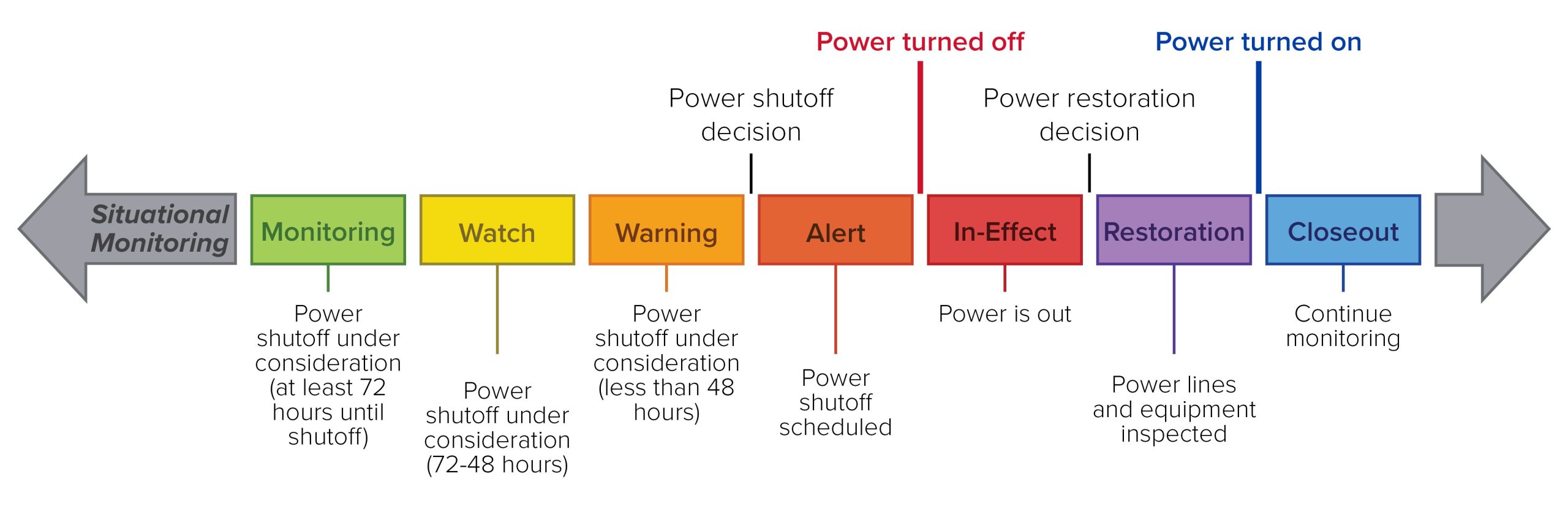
The exact timing can change as weather and fire conditions change. NorthWestern Energy may also determine that a planned shutoff is no longer necessary at any point in the process.
Make sure NorthWestern Energy can reach you
One of the most important things you can do is make sure your contact information is current with NorthWestern Energy.
Potentially affected customers may receive notifications by:
- Phone call
- Text message
- NorthWestern Energy’s website and outage map
- Social media
- Other public information channels
NorthWestern Energy recommends customers update their contact information through their My Energy Account.
Prepare before the power goes out
Don’t wait for a PSPS warning to begin preparing. Every household should have a plan for an extended power outage.
Have an emergency outage kit
Consider keeping the following supplies available:
- Water
- Nonperishable food
- Flashlights and extra batteries
- Battery-powered or hand-crank radio
- Portable phone chargers
- First-aid supplies
- Medications
- Pet food and supplies
- Baby supplies, if needed
- Battery-powered lighting
- Manual can opener
- Blankets and warm clothing
- Cash
- Important documents
Keep the supplies somewhere that is easy to access during an outage.
What happens when the power is restored?
Power may not come back immediately after the extreme weather has passed.
NorthWestern Energy crews must first determine that conditions are safe, then inspect electrical infrastructure for damage or hazards. Crews may need to patrol lines, remove hazards and make repairs before individual circuits and customers can be safely re-energized. Restoration can therefore take several hours or, in some circumstances, days.
PSPS vs. Enhanced Powerline Safety Settings
Not every wildfire-related outage is a PSPS.
NorthWestern Energy also uses Enhanced Powerline Safety Settings (EPSS) on selected lines during elevated wildfire-risk conditions. EPSS makes the electrical system more sensitive to potential faults and can automatically shut off power when something such as a tree branch contacts a power line. These outages are unplanned, whereas a PSPS is a planned, proactive shutoff with advance communications.
Be prepared for the possibility of an outage
A PSPS is intended to reduce wildfire risk, but losing electricity can create its own challenges. Preparing before an event can make an outage significantly easier to manage.
- Know how you will communicate.
- Know how you will get water.
- Plan for medical needs.
- Have backup lighting and power.
- Prepare for pets and livestock.
- Make sure NorthWestern Energy has current contact information for your household.
Planning ahead is especially important for residents in wildfire-prone areas, where a power outage could occur at the same time that fire conditions are deteriorating.