Terminology
- Community Notification System: Gallatin County’s mass notification system that provides messaging, EAS and WEA for the County.
- Everbridge: The vendor for the Community Notification System.
- Emergency Alert System: EAS transmits voice and text messages to local broadcasters.
- Wireless Emergency Alerts: WEA transmits imminent threat messages to cellular phones associated with cell sites in Gallatin County.
Initiation Process
- Contact the Emergency Management Duty Officer with the following information:
- What agency is sending/ authorizing the message?
- What is the messaging area?
- What is the incident and where is it located?
- What actions do you want people to take?
- Where can they get more information?
- Ensure the identified source of additional information is updated and maintained.
- Recognize that CNS is only one tool and it is a good practice to combine the CNS messaging with regular media releases and social media.
Considerations
- The Emergency Management Duty Officer will generally want to speak with the requesting official to ensure the messaging is correct and appropriately targeted.
- Messaging of people, other than opt-in lists, is restricted to time sensitive life safety situations. Updates and cancellations may be more appropriate through other public information methods.
- Wireless Emergency Alerts are an available tool, but they have some significant limitations on message content and audience.
Reference
| Gallatin County Emergency Management (406) 451-0672 |
Terminology
- Emergency: The imminent threat of a disaster causing immediate peril to life or property that timely action can avert or minimize.
- Disaster: The occurrence or imminent threat of widespread or severe damage, injury, or loss of life or property resulting from any natural or artificial cause, including …
- Political Subdivision: any county, city, town, or other legally constituted unit of local government in this state.
- Principal Executive Officer: the mayor, presiding officer of the county commissioners, or other chief executive officer of a political subdivision. *Must be elected official, chief executive officer applies to consolidated MT governments.
Initiation Process
- Contact Emergency Management Duty Officer.
- Identify the intended outcome of the declaration.
- Suspension of normal operations.
- Fiscal Costs.
- Public recognition of incident.
- Implement Authorities of Principal Executive Officer.
- Utilize declaration templates in consultation with legal counsel.
- Sign by Principal Executive Officer (typically ratified by full governing body when possible).
- Notify and provide declaration to Montana Disaster and Emergency Services.
- File with Clerk for political subdivision.
Considerations
- Think about the purpose and desired outcome from issuing a declaration. Many times, there is no inherent benefit other than public recognition of an incident.
- If significant costs are expected to be incurred, specific records and business practices will need to be followed for maximum cost recuperation. Coordinate this with Emergency Management early.
- In order to access public agency fiscal support from the State of Montana, or the US government, the emergency tax as outlined in 10-3-405, MCA must be levied.
- Principal Executive Officers have very specific authorities listed under 10-3-406, MCA that should be implemented through consultation with legal counsel.
Reference
Terminology
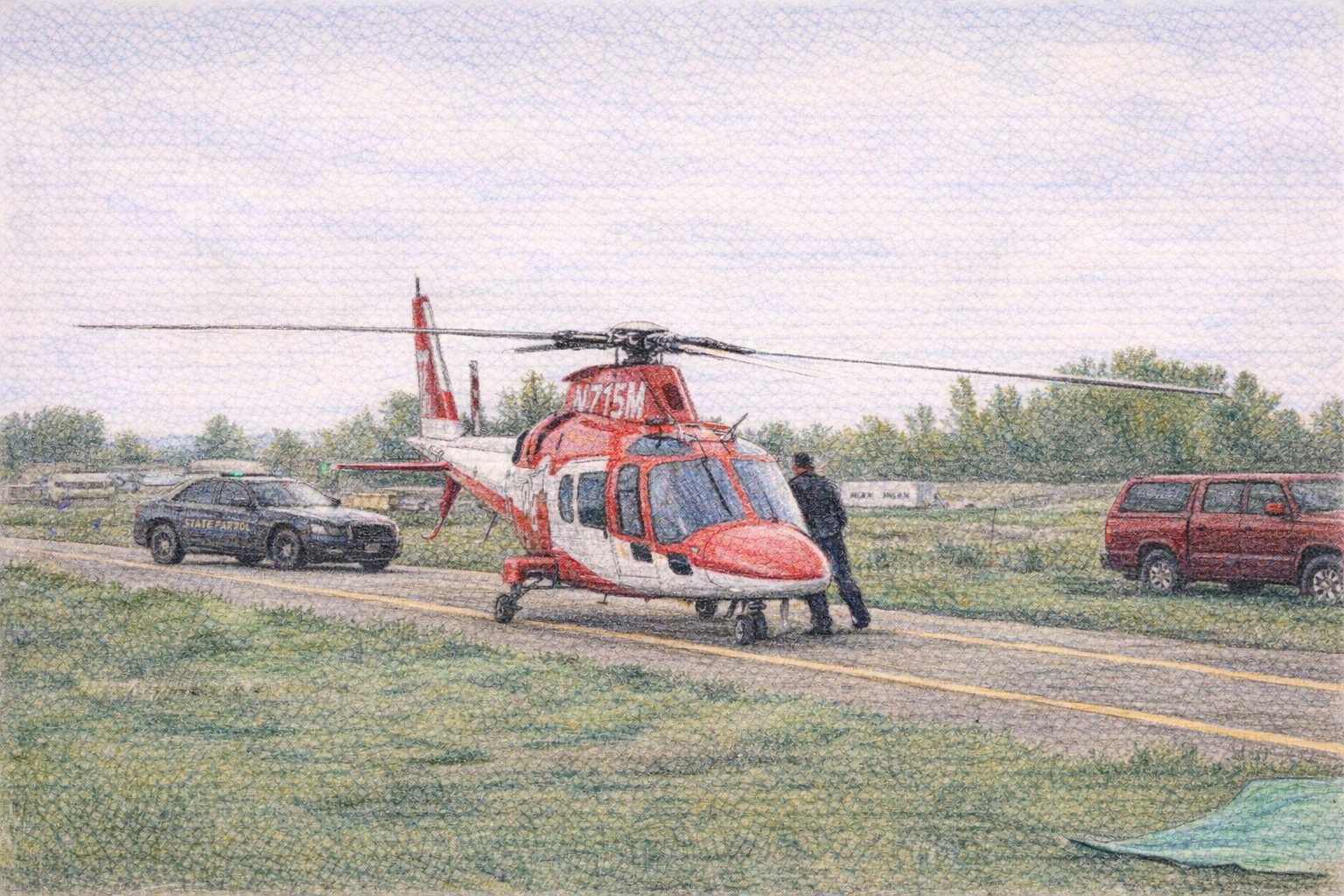
- DNRC Helicopter: Either a state owned, or a state authorized, helicopter that supports local government wildfire suppression.
- Helitack Crew: A 3-5 person wildfire crew that arrives on a DNRC helicopter. These personnel can be utilized for non-aviation activities on a fire.
- Air Attack: The common term for an Air Tactical Group Supervisor in a fixed wing plane who manages airborne aircraft on a wildfire. They can also provide good intelligence on wildfire activity and access.
- Air Tanker: A fixed wing aircraft configured to drop retardant, or water, on a wildfire.
- Lead Plane: A fixed wing airplane operated by a air tanker pilot who recons placement of air tanker drops, then leads the air tankers.
- Hand Crew: Generally refers to a 20 person wildfire crew utilized for wildfire suppression.
- County Assist: A process where the DNRC has determined Mutual Aid is no longer appropriate. This is typically related to the cost of suppressing the fire. At this point, the County becomes the avenue for resources through the County’s Cooperative Fire Control Agreement with DNRC.
Initiation Process
- There is no defined list of what can be requested from DNRC through mutual aid, so ask for what you think you need.
- Place requests through Gallatin County Dispatch stating that you are “requesting mutual aid from DNRC for 1 helicopter and an Air Attack.”
- DNRC will always loop back to the Fire Warden to confirm the request at which point the Fire Warden will confirm the situation, or seek more information. It is not uncommon for wildfire resources to be spread thin and get triaged, so it is important to provide a clear assessment of the fire and values at risk.
- Once a Fire Warden is engaged in the incident, wildfire resources will be coordinated through them.
- If an incident transitions from mutual aid to a County Assist, the Fire Warden will take care of this process behind the scenes. However, at this point the County becomes an Agency Having Jurisdiction for the wildfire with the Fire Warden as the Line Officer.
Considerations
- Be prepared to receive a helicopter by monitoring the Air to Ground channel and having an assignment ready. Also know if you want a recon of the fire before the helicopter configures for water drops.
- If considering air tankers, order early. There is often great competition for them and they may be coming from a long way away. This is a high cost item that will require qualified management before being approved.
- Interagency resources (engines and crews) can be a great resource to relieve local engines and support extended attack/ mop up. There is often lead time and travel in order for them to get here, so plan ahead.
- Involve the Fire Warden early in incidents that are escalating. They can grease the process and get resources escalated.
Reference
| Gallatin County Emergency Management (406) 451-0672 | Billings Interagency Dispatch (406) 896-2900 |
Terminology
- Responsible Party: Individual, or company, who owns the product that is spilled or released. This is typically the owner of a fixed facility or a transportation company. In situations where a responsible party is not known, the property owner where the incident occurred is the responsible party.
- Reportable Quantity: The threshold amount where anything above it needs to be reported.
- LERA: Political Subdivisions are required to appoint a Local Emergency Response Authority who is responsible for ensuring an appropriate response to hazardous materials incidents. This is Gallatin County Emergency Management of all of Gallatin County.
Initiation Process
- Notifications are required for:
- Spills of petroleum products greater than 25 gallons.
- Spills of petroleum products that enter, or could enter, into waterways.
- Spills of any chemical in a quantity equal to, or above, the reportable quantity for products regulated under CERCLA or EPCRA.
- It is often hard to determine what needs to be reported. If you think it might need to be, then treat it as a reportable spill.
- The responsible party is required to notify the following for a reportable spill:
- Gallatin County Emergency Management on behalf of the LEPC.
- Montana Disaster and Emergency Services on behalf of the SERC.
- National Response Center on behalf of EPA/ USCG.
- In situations where the spiller is unknown, use caution on the actions to take so you don’t assume ownership. Contact Emergency Management to work through the Orphaned Chemical process.
- For spills of significance, it is asked that the local response agency notify Gallatin County Emergency Management to support the response and ensure proper mediation of the spill.
Considerations
- If the spill isn’t contained, exceeds the spillers capacity to control, or poses a threat to the community; consider requesting the Bozeman HazMat Team.
- The Bozeman HazMat Team’s job is to stop spills and mitigate dangerous situations. Their job is not to clean up the spill after the situation is stabilized. This includes fuel spills. The responsible party is responsible to cleaning up the spill.
- It is common, especially in transportation incidents, that the responsible party doesn’t know what that means or what to do. The first step is to have them contact their insurance company. Most insurance companies recognize the liability and are very rehearsed at how to respond. Emergency Management can also provide support for the responsible party.
Reference
| Gallatin County Emergency Management (406) 451-0672 | Montana Disaster and Emergency Services (406) 324-4777 | National Response Center (800) 424-8802 |
Terminology
- Gallatin Media Center: An interagency online media release system maintained by Gallatin County for use by all agencies.
Initiation Process
- User accounts can be obtained from Gallatin County Emergency Management.
- Log into the system, create a new post with your information.
- When you publish the post, it will automatically be emailed to local media outlets.
Considerations
- This is designed to be self-implemented by individual agencies for either routine or non-routine incidents. Emergency Management can also support issuing releases for agencies.
- The system is not branded, and individual releases can be formatted to meet your agency needs.
- The system is self-maintaining, so you don’t have to maintain a current media distribution list.
Reference
| Gallatin County Emergency Management (406) 451-0672 |
Terminology
- Open Burning: The ignition, setting or burning of any material directly in the open air including slash, land-clearing or debris burning fires. Open burning does not include a Recreational Fire.
- Open Burning Season: Is established from March 1 through November 30 of each year as the time when Open Burning can take place. No Permits will be issued for dates outside of Open Burning Season.
- Permit: Is a document issued by the County or any rural fire district or fire service area through its Fire Chief which provides permission to ignite or set a fire pursuant to these regulations. A Permit does not allot the ignition, setting or burning of materials prohibited by state or federal law.
- Permit Holder: Means the person, firm or corporate entity to whom a Permit is issued or the individual person acting as its agency or designee.
- Recreational Fire: Means a fire ignited, set or burning in a nonflammable structure measuring less than 48 inches and for which a reasonably prudent and suitable source of extinguishing the fire is available.
- Burn Ban: A formal act by resolution by a governing body of a political subdivision further restricting activities, beyond those regulated by open burning, due to fire danger.
Initiation Process
- Anyone conducting Open Burning must purchase a permit each Open Burning Season. The Permit is good everywhere in Gallatin County and can be utilized at multiple locations.
- Permits must be activated each day prior to conducting Open Burning.
- Permits can be activated online at gallatinburnpermits.com or by phone at 888-540-8131.
- Details on Open Burning status and regulations are available at burnpermits.readygallatin.com.
Considerations
- While fire officials try to monitor weather conditions, the Permit Holder is ultimately responsible for ensuring it is safe to conduct Open Burning and controlling the fire at all times until it is completely extinguished.
- Burn Permits are intended to aid Permit Holders in determining when conditions are known to not be safe for Open Burning. Additionally, it helps prevent fire departments from needlessly responding to known Open Burning.
- Burn barrels by themselves are legal, however the materials most people burn in them are not. It is illegal to burn food waste, plastics, treated lumber, demolished structures, petroleum products, animal waste, etc…
- Burn Permits are not needed for recreational fires.
- Burn Permits can be purchased in person at the Bozeman Fire Department, Central Valley Fire District, Gallatin County Treasurers Office, Three Forks Library & Manhattan Fire Department.
- It is possible to burn outside of the Open Burning Season, but not under the county’s Open Burning authority. It is possible to obtain a permit from Montana DEQ to burn outside of Open Burning Season. Individuals conducting active timber operations can also burn outside of the Open Burning Season through their Hazard Reduction Agreement with Montana DNRC.
Legal References